
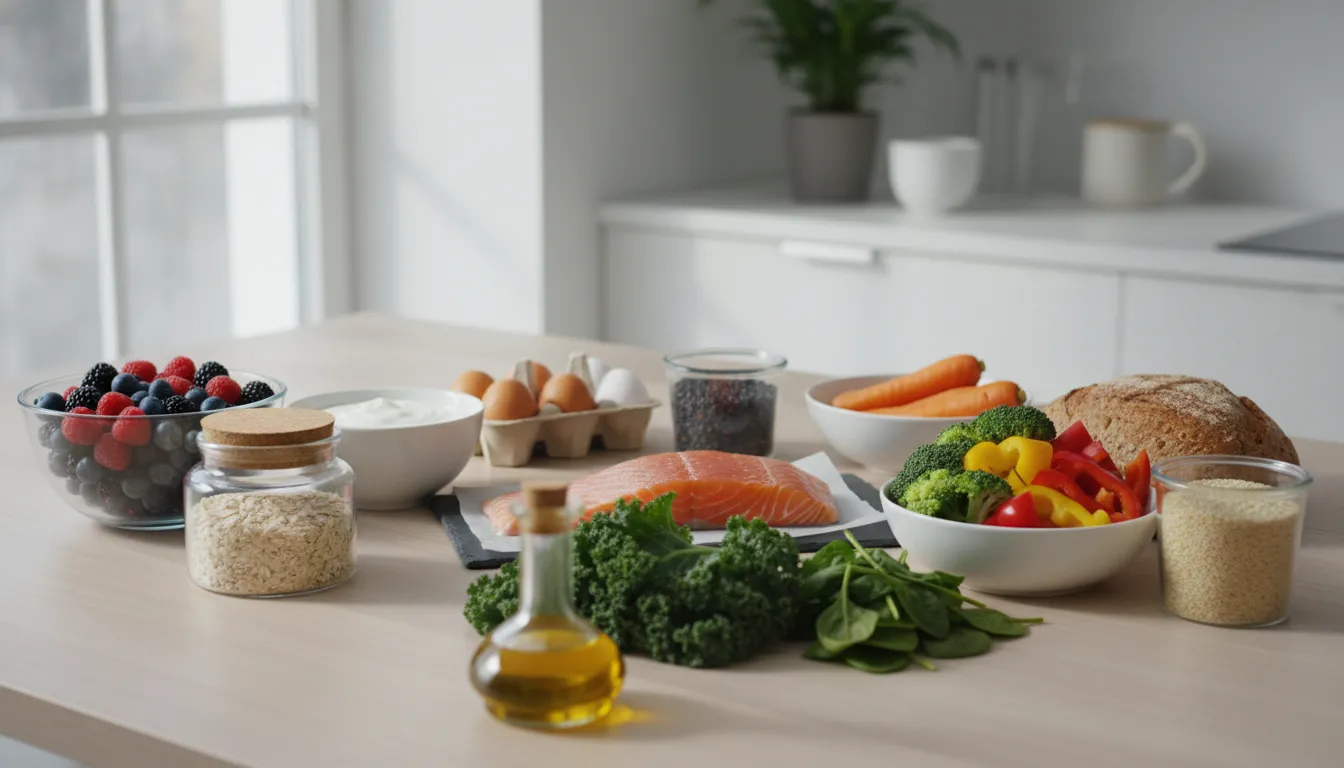
If you are trying to improve healthy food, diet, nutrition in 2025, you do not need another complicated plan. You need consistent, nutrient-dense foods that are easy to recognize in a real grocery store, plus a few rules that prevent common “healthy-sounding” traps.
This guide focuses on practical, budget-aware picks for breakfast, lunch, and dinner, and it includes a simple checklist so you can choose smarter without overthinking.
Table of Contents
- What “healthy food, diet, nutrition” should look like (in real life)
- 9 healthy grocery choices to build a cleaner diet in 2025
- A simple framework for building breakfast, lunch, and dinner
- Pitfalls to avoid when shopping for healthy food, diet, nutrition
- FAQ about healthy food, diet, nutrition
- Takeaway: make healthier choices easy with a repeatable grocery rule-set
What “healthy food, diet, nutrition” should look like (in real life)
Most people fail not because they lack motivation, but because packaged foods are designed to be confusing. A strong approach to healthy food, diet, nutrition usually comes down to four basics:
- Protein and fiber first to support fullness and stable energy.
- Fewer ultra-processed ingredients that replace real food components.
- Thoughtful fats from whole food sources instead of highly refined seed-oil blends.
- Simple ingredient lists that you can pronounce.
Use the choices below as your “default foods.” When you keep a few reliable staples on hand, healthier meals become automatic.
9 healthy grocery choices to build a cleaner diet in 2025
1) Grass-fed butter (choose higher fat, not more processing)
Not all butter is the same. A better option tends to be grass-fed and slightly higher in butterfat, which often results in a richer taste and texture.
How to pick at the store:
- Look for grass-fed milk sources.
- Check fat content if available. Higher butterfat usually means better quality and fewer added components.
- Prefer brands with short ingredient lists and clear sourcing.
Best use: cooking, spreading on whole-food toast, or adding to vegetables for satiety.
2) Pasture-raised eggs (skip “marketing” labels)
Egg quality depends heavily on how hens are raised and what they eat. In general, pasture-raised hens that forage for insects and grass produce eggs with a better nutrient profile than eggs from crowded indoor systems.
How to confirm pasture access:
- Look for details like free to forage or specific outdoor space information.
- Be cautious with labels that sound outdoor but do not provide meaningful living conditions.
Best use: omelets, hard-boiled snacks, breakfast bowls, or adding protein to salads.
3) Whole oats (instead of sugar-heavy “cereal”)
If you want a breakfast that supports healthy food, diet, nutrition, oats are a strong starting point. They deliver fiber and steady energy, and they are easy to customize.
What to look for:
- Plain rolled oats or steel-cut oats.
- Minimal ingredients (ideally just oats).
- Optional: organic if it fits your budget.
Best use: overnight oats, warm oatmeal, or blended into smoothies for thickness.
4) Bread rules: whole grains, fiber, and minimal added sugar
The bread aisle is where “healthy” claims often hide ultra-processed formulations. A better approach is to use a simple filter: whole grains, fiber, and low added sugar.
Quick bread checklist:
- Avoid breads with enriched flour as a main ingredient.
- Avoid long ingredient lists with industrial additives.
- Choose bread with meaningful fiber per slice.
- If there is added sugar, prefer it coming from honey or fruit juice rather than high amounts of refined sugar.
Best use: sandwiches, toast, and bread-based meals only when the ingredient list passes the checklist.
5) Canned tuna, salmon, or sardines (protein and convenience)
For lunch, budget-friendly seafood is one of the easiest wins for healthy food, diet, nutrition. It is high in protein and can be ready in minutes.
How to make the best choice:
- Prefer options with straightforward ingredients (fish plus minimal additions).
- If you limit mercury exposure, consider smaller fish (for many people, this is a practical choice).
- Pair with fiber-rich add-ons like celery, pickles, olives, leafy greens, or whole-grain bread.
Best use: tuna salad bowls, salmon patties, or quick sandwiches.
6) Clean deli meat or better whole cuts (don’t treat all “turkey” equally)
Deli turkey can be convenient, but many brands contain fillers and additives that reduce the overall nutritional value. If you buy deli meat, look for short ingredient lists.
Better lunch-meat standards:
- Choose turkey with ingredients that are mostly turkey, salt, herbs, and simple binders.
- Limit ingredients like phosphate additives and multiple “flavoring” components.
- If organic fits, it can help with feed sourcing, but ingredient simplicity matters most.
Best use: turkey sandwiches, protein add-ins for salads, or wraps.
7) Snacks and chips: choose the oil source
Most chips are fried in refined seed-oil blends. If you want a “real food” approach, treat chips like an occasional food and choose the least inflammatory oil option available.
Chip oil rule:
- Check the ingredient list for the type of oil.
- Look for options using oils like avocado oil (when available).
- Avoid products that rely on common seed-oil frying blends.
Best use: an occasional snack paired with protein or a balanced meal.
8) Ground beef: grass-fed when possible, and use the label correctly
Ground beef quality depends on what the animals eat. If your goal is nutrient-dense healthy food, diet, nutrition, grass-fed is generally a better direction than grain-fed.
How to interpret the label:
- “100% grass-fed” is a strong standard.
- “Organic” is helpful, but grass-only feeding is often the key factor for nutrient density.
Best use: burger bowls, chili, taco meat, meatballs, or lettuce-wrapped meals.
9) Wild-caught fish (especially when you want omega-3 density)
For dinner, wild-caught fish is a dependable nutrient-dense option. It often has a more favorable omega-3 profile than farmed fish.
How to pick:
- Choose wild-caught when available.
- Check for clear sourcing and avoid overcomplicated products.
- Rotate species when possible for variety.
Best use: pan-seared fillets, sheet-pan dinners, or quick fish tacos with high-fiber toppings.
A simple framework for building breakfast, lunch, and dinner
Instead of memorizing recipes, use a repeatable structure that matches these “default foods.”
Breakfast formula (protein + fiber)
- Option A: pasture-raised eggs + sautéed vegetables + whole-grain toast (fiber-forward).
- Option B: oats topped with nuts or seeds, plus a protein add-on if needed.
Lunch formula (protein + volume)
- Option A: tuna or salmon salad with olive, pickles, celery, and greens.
- Option B: turkey sandwich using cleaner deli meat, plus a side of vegetables.
Dinner formula (lean protein + fats + color)
- Option A: grass-fed ground beef with vegetables and olive oil or butter.
- Option B: wild-caught fish with a fiber-rich side (salad, roasted vegetables, or legumes if tolerated).
Pitfalls to avoid when shopping for healthy food, diet, nutrition
- Assuming “whole grain” is automatically healthy. Bread can still be ultra-processed. Check fiber and added sugar.
- Letting labels replace the ingredient list. “Cage-free” can mean very different living conditions than pasture access.
- Buying snacks for frequency instead of nutrition. Chips are still fried. Oil choice matters, but portion still matters.
- Thinking all protein foods are equal. Tuna, salmon, eggs, and deli meat differ in nutrient density and ingredient quality.
- Overcomplicating the system. Healthy food, diet, nutrition improves fastest when shopping decisions are simple and repeatable.
FAQ about healthy food, diet, nutrition
What are the best healthy food choices for beginners?
Start with a small set of reliable staples: pasture-raised eggs, whole oats, fiber-forward whole-grain bread, canned seafood for quick protein, clean deli meat or whole cuts, and grass-fed or wild-caught options for dinners.
How can I tell if bread is actually healthy?
Prefer breads that do not rely on enriched flour, have meaningful fiber per slice, and have little or no added sugar. Avoid long ingredient lists with industrial additives when possible.
Are oats better than cereal?
In many cases, yes. Many cereals contain added sugar and refined grains. Plain oats typically deliver more fiber with fewer added ingredients.
Is it necessary to avoid seed oils completely?
Many people aim to reduce highly refined seed-oil blends as part of their nutrition strategy. If you do not want an all-or-nothing approach, start by choosing better oil sources for high-frequency foods like snacks and cooking.
What should I prioritize first: protein, fiber, or fats?
Prioritize protein and fiber first because they directly support fullness and stable energy. Then choose fats thoughtfully based on what helps your meals taste satisfying.
How do I make lunch healthier without cooking?
Use quick-protein options like canned tuna, salmon, or sardines and combine them with fiber-rich add-ons such as celery, pickles, greens, olives, and whole-grain bread or salad.
Takeaway: make healthier choices easy with a repeatable grocery rule-set
Improving healthy food, diet, nutrition in 2025 is less about “perfect” and more about repeatable grocery decisions. Choose nutrient-dense staples for breakfast, protein-focused lunch options, and high-quality proteins for dinner. Then use simple label checks to avoid ultra-processed traps.
If you want a one-page shopping list to start: pasture-raised eggs, whole oats, fiber-forward bread with low added sugar, canned tuna or salmon, cleaner deli turkey or whole cuts, better-oil chips for occasional snacking, grass-fed ground beef, and wild-caught fish.
If you’re building consistency in your routine (including what you eat), it helps to plan around simple, repeatable decisions—like choosing nutrient-dense staples. For additional inspiration, check out our gym-focused nutrition tips on healthy foods.
And if you want to tighten your habit loop even more, pair better groceries with a structured training plan (movement helps reinforce the results of improved diet). Start with nutrition facts.
Comments
Post a Comment
Thanks for your comment :)