
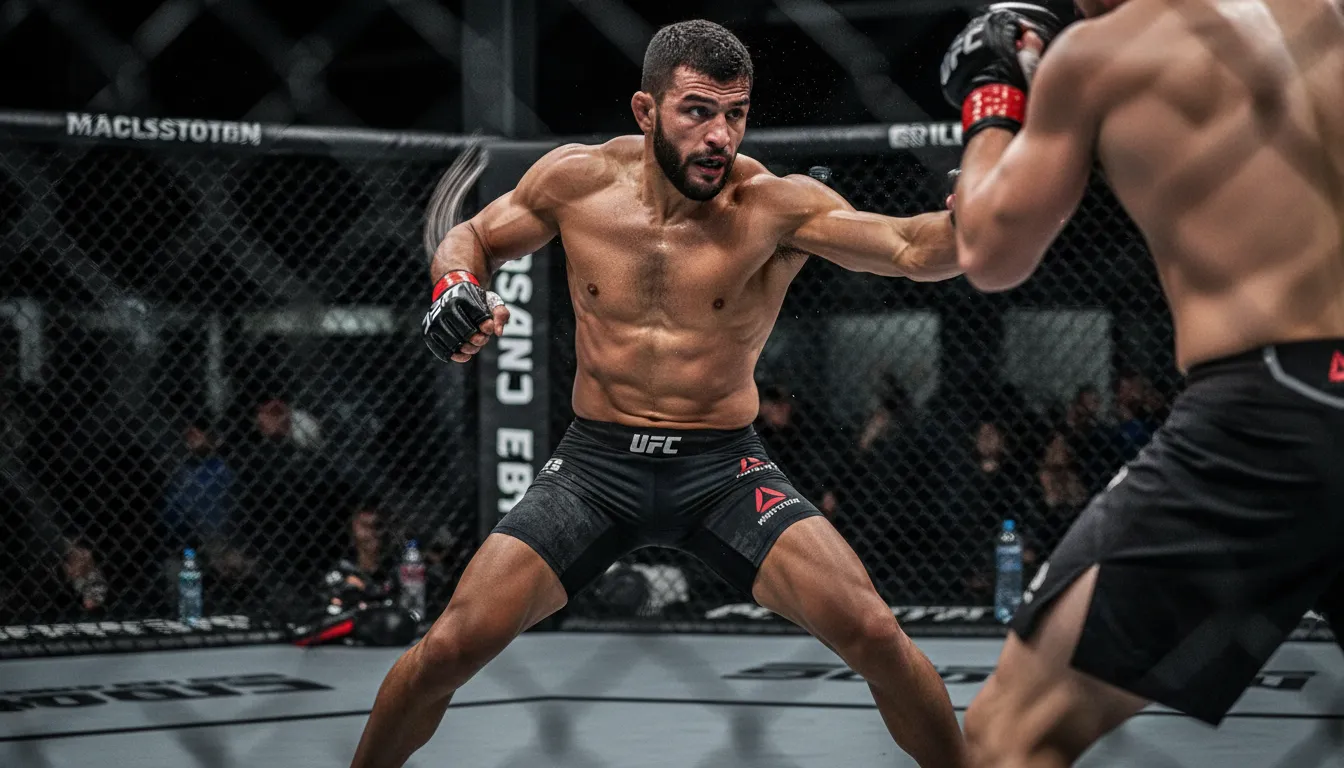
The name Jiri Prochazka, UFC, Fight captures one of MMA’s most distinctive striking styles. If you want to understand the mechanics, mindset, and drills behind an unorthodox, pressure-heavy approach — and apply it safely in your own training — this guide breaks down the essentials into actionable steps.
Table of Contents
- 🥊 What defines the Jiri Prochazka, UFC, Fight style?
- ⚖️ Core principles to practice (and why they matter)
- 🦶 Practical drills to build the style
- 🧠 Mindset and breathing techniques
- 🥋 Sparring tips and safety
- ❗Common mistakes and how to avoid them
- 📋 Training checklist (30-day cycle)
- 🔁 Summary: Putting it together
🥊 What defines the Jiri Prochazka, UFC, Fight style?
Jiri Prochazka, UFC, Fight is best characterized by unusual posture, relentless forward pressure, and fluid timing. Rather than relying on textbook guard positions, this style uses:
- Distance as defense — controlling space with footwork more than a high guard.
- Timing and rhythm — oscillating between tension and relaxation to bait and capitalize on openings.
- Angle changes — stepping off the center line immediately after attacks to create superior lines.
- Adaptive offense — turning an opponent’s motion into your own attack by using their momentum.
⚖️ Core principles to practice (and why they matter)
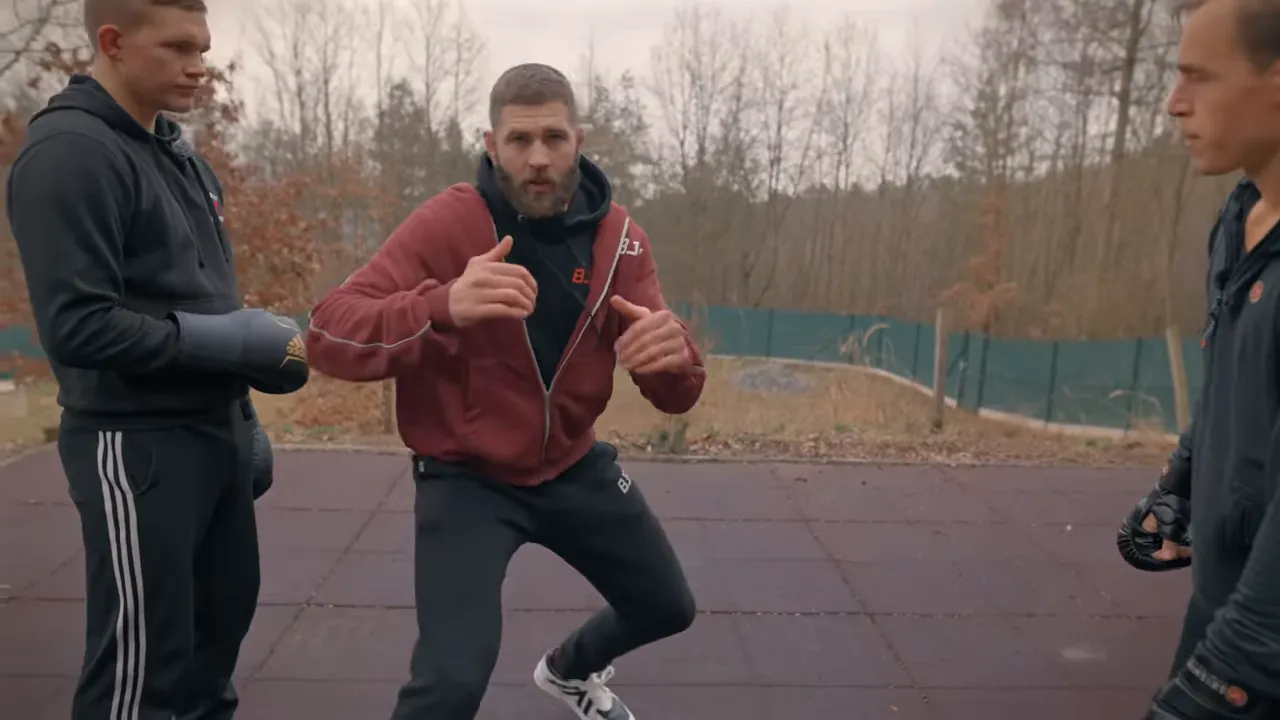
Train these four principles repeatedly. They form the backbone of the Jiri Prochazka, UFC, Fight approach and are useful for any striker who wants to combine unpredictability with control.
- Relaxed vigilance — remain mentally calm while your body stays ready to strike or step. This reduces wasted tension and improves reaction time.
- Distance control — learn to use footwork as your shield so you are never purely defensive but always in range to attack.
- Timing windows — practice attacking before, during, and after an opponent’s committed motion.
- Angle discipline — finish your attack by moving to an off-center position to avoid counters.
🦶 Practical drills to build the style
Use the following drills in a 2–4 day weekly cycle. Each drill targets a specific skill from the Jiri Prochazka, UFC, Fight repertoire.
- 15-minute dynamic warm-up: burpees, high knees, jumping variations to develop lightness and breathing control. (Focus on staying fresh and moving rhythmically.)
- Distance rhythm drill: pair up. One partner leads slow/fast rhythm while the other mirrors distance and snaps a counter when the leader overcommits. Build the ability to slow down a fast opponent and speed up a slow one.
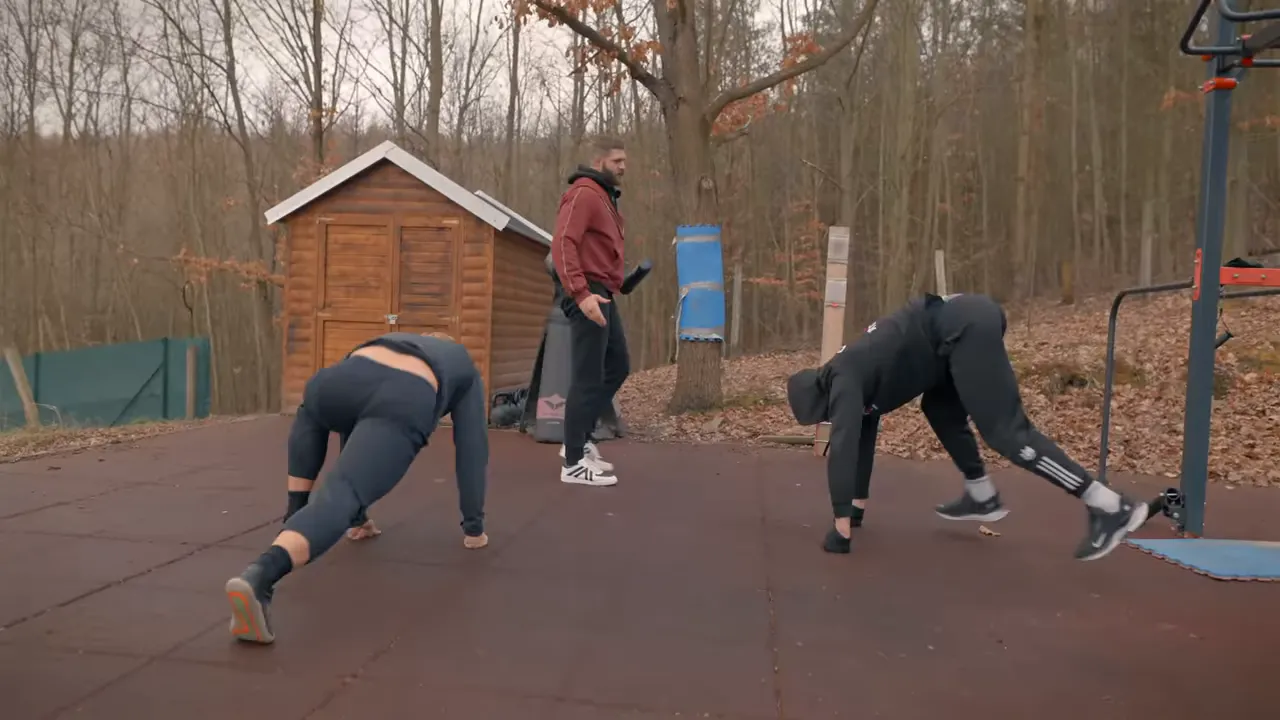
Pair up for a distance-rhythm drill: one partner leads tempo while the other mirrors distance and snaps counters. - Attack-timing ladder: three timing windows — pre-attack, in-attack, post-attack. Drill slips + immediate counters and counters that convert into angle steps.
- Pressure rounds: short (90-second) rounds where one partner applies controlled forward pressure and the other practices escape angles and short counters. Emphasize legs and footwork to avoid getting pinned.
- Lightness to explosion: start with bouncing, rhythmic feet; finish with sudden aggressive starts to simulate explosive entries and recovery.
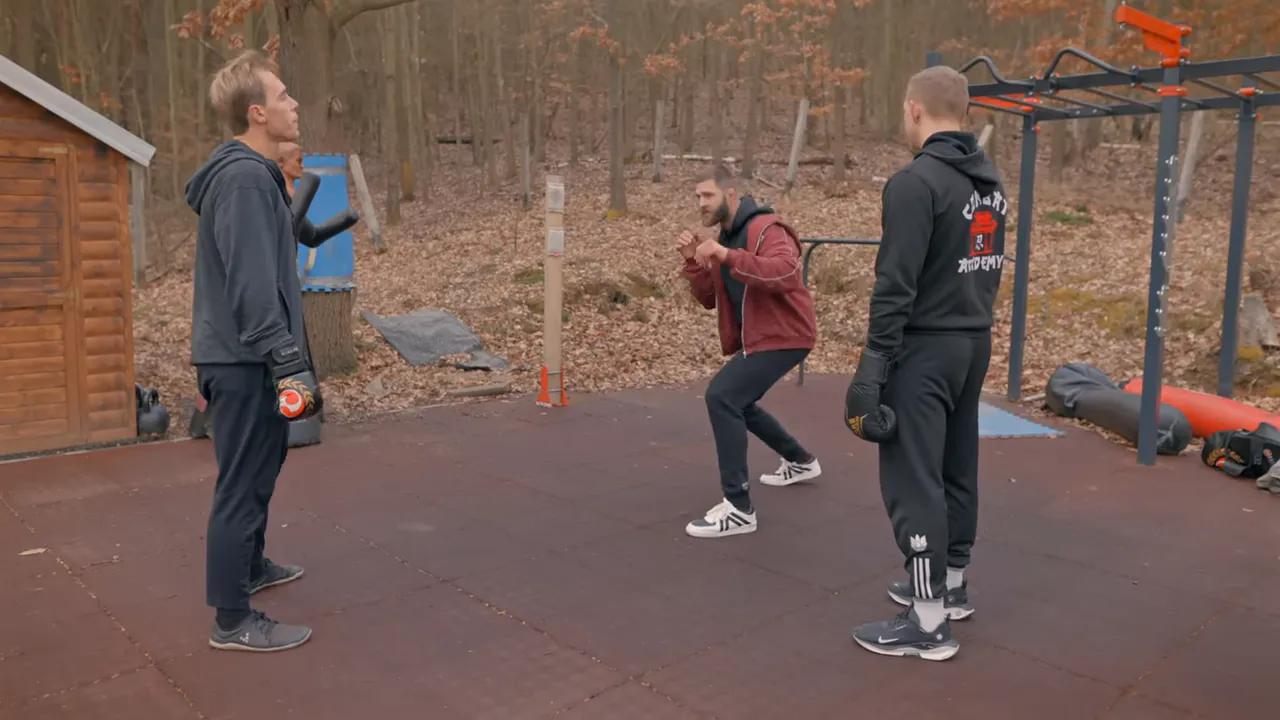
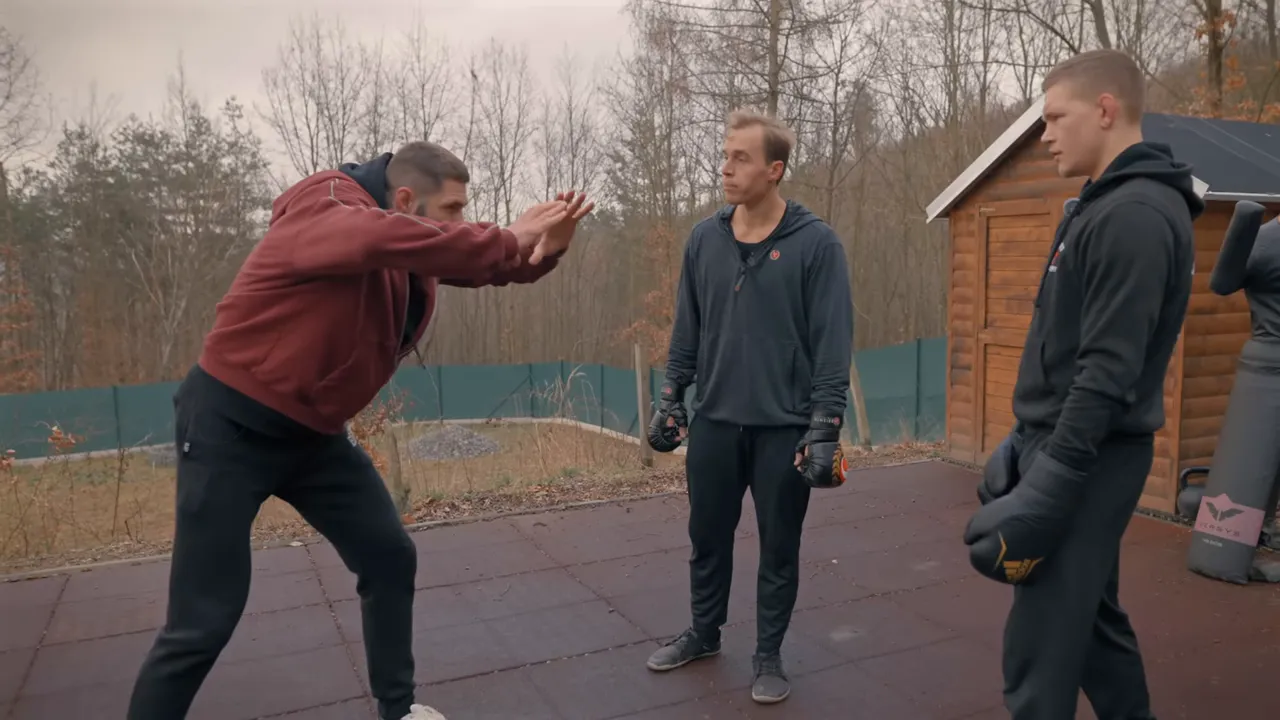
Low, rhythmic crouch to load the legs for an explosive start.
🧠 Mindset and breathing techniques
The mental game is as important as technique. Adopt three practices to develop the calm-aggressive mentality central to Jiri Prochazka, UFC, Fight:
- Short focused meditation: 5–10 minutes of single-object focus (breathing, a small object) to build attention control.
- Positive step-by-step thinking: when under pressure break actions into immediate steps — breathe, reframe, execute.
- Make discomfort familiar: intentionally include uncomfortable drills so that stress becomes manageable rather than paralyzing.
🥋 Sparring tips and safety
Applying unorthodox pressure safely requires guidelines to protect both you and your partners.
- Start light and controlled: introduce low-intensity pressure rounds before full-power sparring.
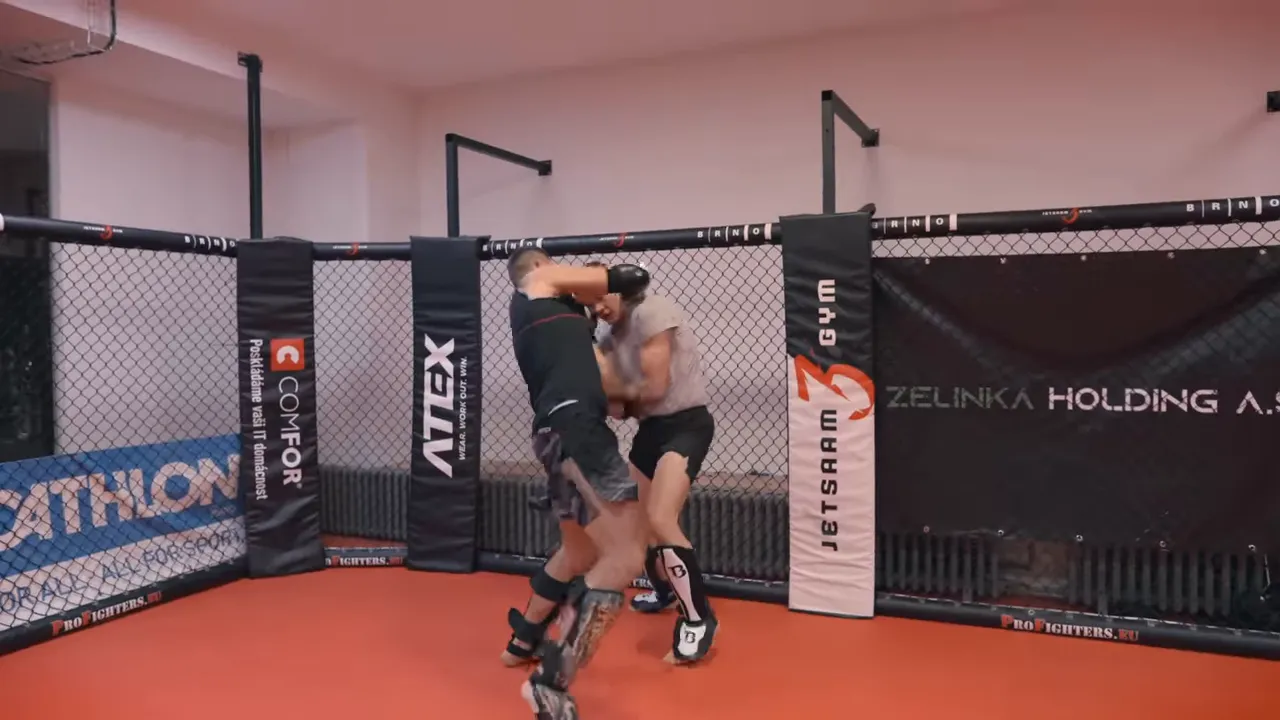
- Protect your head and legs: unconventional guards leave openings. Practice counters that cover knees and chin while keeping mobility.
- Use framing and distance resets: if caught in clinch or leg-catch, create frames with your head/forearm and move to a safer angle.
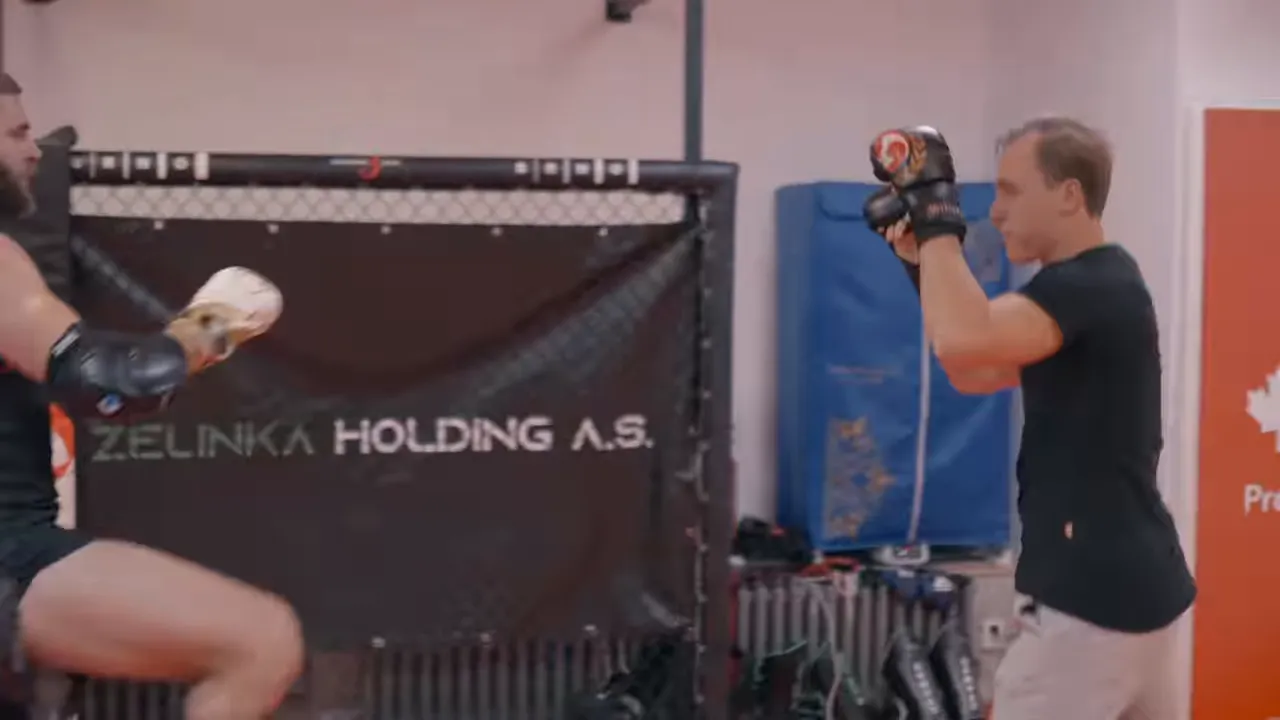
Create a forearm frame and reset distance to escape clinches or leg-catches. - Monitor fatigue: pressure-heavy styles burn energy quickly; prioritize short, sharp bursts over long, sustained output.
❗Common mistakes and how to avoid them
- Over-reliance on unconventional guard — without timing and footwork this leaves you vulnerable. Fix: drill distance control and counters.
- Too much emotion when ahead — getting eager to finish breaks flow. Fix: practice staying present and taking each exchange step by step.
- Ignoring leg work — legs control range. Fix: add daily footwork and conditioning sessions focused on mobility.
- Copying style without foundations — mimicry without stance, timing, or conditioning leads to injury. Fix: build base skills first, then layer unorthodox movement.
📋 Training checklist (30-day cycle)
- Weeks 1–2: 3 technical sessions focusing on distance and timing drills + 2 conditioning sessions.
- Weeks 3–4: Add 2 sparring sessions with controlled pressure and 1 video/self-review session to identify timing errors.
- Daily: 5–10 minutes of focused breathing/meditation and mobility work for lightness.
🔁 Summary: Putting it together
To adopt elements of the Jiri Prochazka, UFC, Fight approach, focus on distance control, timing, angle management, and mental discipline. Build these skills progressively with targeted drills, protect your training partners, and prioritize conditioning. Use the checklist and drills above to train efficiently and safely.
What is the best drill to learn angle changes?
Partnered attack-and-step drills: throw a single strike, then immediately step off the center line to a new angle. Repeat with varying entry speeds until stepping is second nature.
How often should I spar using pressure-based strategies?
Limit full-intensity pressure sparring to 1–2 sessions per week. Use lighter, technical pressure rounds more frequently to build skill without overtraining.
Can beginners use this style safely?
Yes, but begin with foundational stance, footwork, and timing drills. Avoid full-power sparring with unfamiliar techniques until basics are solid.
Keyphrase: Jiri Prochazka, UFC, Fight — practice the fundamentals, then layer unorthodox movement and mindset. Progress measured training builds reliable, dangerous unpredictability.
Comments
Post a Comment
Thanks for your comment :)